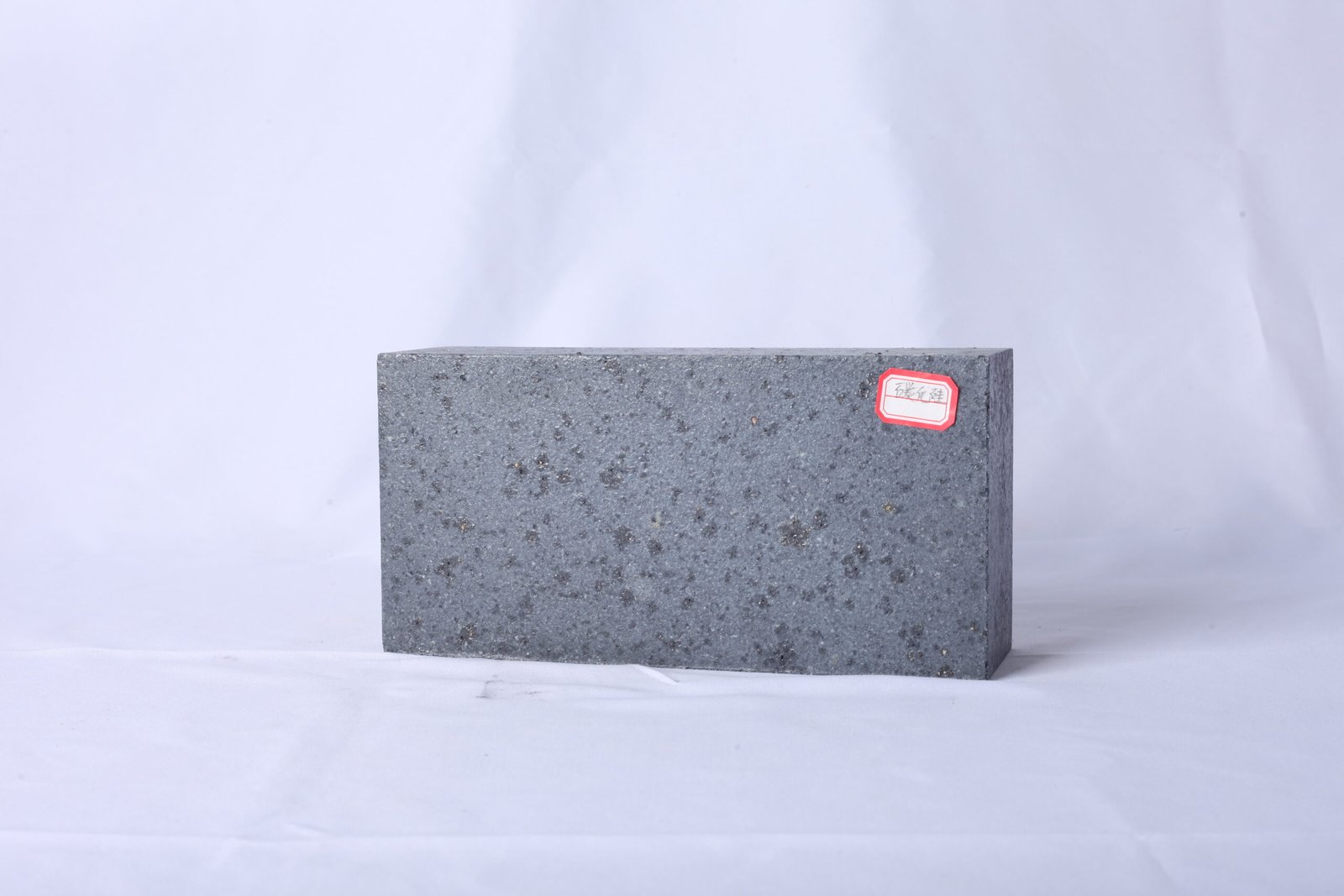
描述
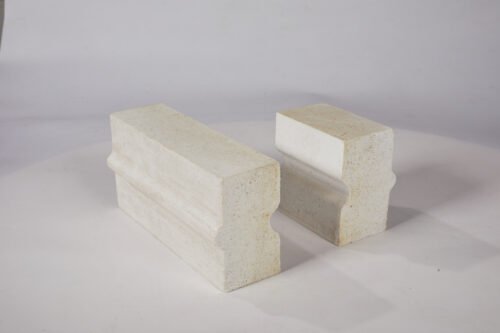
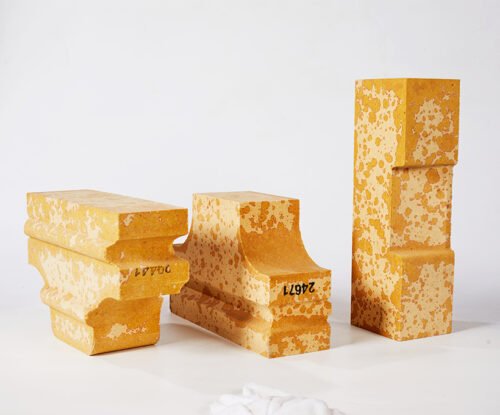
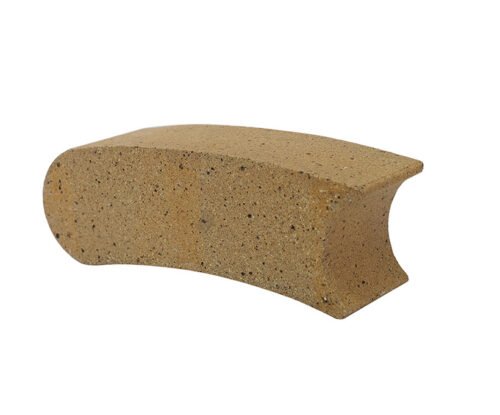
Description of silicon carbide bricks:
Silicon carbide bricks are advanced refractory materials made mainly from SiC, featuring a series of excellent properties such as high strength at both normal and high temperatures, large thermal conductivity, small thermal expansion coefficient, good thermal shock resistance, excellent high-temperature wear resistance, and strong resistance to chemical erosion. It is widely applied in the steel industry, non-ferrous metallurgy, petrochemical industry, power, ceramics and aerospace fields.
Key Application Areas of Silicon Carbide Bricks:
- Steel metallurgy
Blast furnace lining: Used in the abdomen, bottom layer and lower stack area to withstand extreme temperatures (>1500°C) and slag erosion.
Hot blast stove: Due to its high thermal conductivity and thermal shock resistance, it can be used as a heat exchanger in high-temperature air ducts.
Molten iron treatment equipment (such as torpedo ladles, mixers) : Resistant to chemical corrosion by molten iron and slag. - Nonferrous metal smelting
Aluminum electrolytic cell: Lining material used to resist corrosion by molten aluminum and cryolite (Na₃AlF₆).
Copper-zinc smelting furnace: It is used in the furnace chamber and flue to withstand metal vapor and high-sulfur environments. - Ceramics and glass industry
Kiln furniture (shelves, feeders) : Supports the ceramic body during repeated firing (1300-1600°C) and prevents deformation.
Glass furnace: Used in the regenerator inspection device for waste heat recovery. - Chemical and energy industry
Gasifier: The lining material of Shell/Texaco gasifiers resists slag erosion under high temperature and high pressure.
Petrochemical refining: Linings for fluid catalytic cracking (FCC) units, durable catalyst wear and acidic gases. - Environment and New Energy Applications
Waste incinerator: Can withstand highly corrosive combustion environments (such as HCl, SO₂, etc.).
SiC ceramic filters: used for high-temperature dust removal (such as in coal-fired power plants).
Technique Data of Silicon Carbide Brick:
(1)Oxide Bonded Silicon Carbide Brick
| Items | Specifications | ||
| Clay Bonded SiC | Mullite Bonded SiC | SiO2 Bonded SiC | |
| SiC % | >85 | >70 | ≥90 |
| Bulk Density g/cm3 | 2.5~2.6 | 2.55~2.65 | 2.6~2.7 |
| Apparent Porosity % | ≤20 | ≤16 | ≤15 |
| CCS MPa | ≥100 | ≥100 | ≥120 |
| CMOR MPa | ≥20 | ≥25 | ≥25 |
| Thermal Expansion Coefficient℃-1 20~1000℃ | 4.6×10⁻⁶ | 4.6×10⁻⁶ | 4.7×10⁻⁶ |
| Thermal Conductivity W/(m·K) 1000℃ | ≥11 | ≥11 | ≥13 |
(2)Nitride Bonded Silicon Carbide Brick
| Items | Specifications | ||
| Si3N4 Bonded SiC | Si3N4 Bonded SiC | Sialon Bonded SiC | |
| SiC % | ≥70 | ≥72 | ≥71 |
| Si3N4 % | ≥20 | ≥20 | / |
| N % | / | / | ≥5.5 |
| Al2O3 % | / | / | ≥5 |
| Fe2O3 % | ≤1.0 | ≤0.7 | ≤0.7 |
| Bulk Density g/cm3 | ≥2.60 | ≥2.65 | ≥2.65 |
| Apparent Porosity % | ≤18 | ≤16 | ≤16 |
| CMOR MPa | ≥40 | ≥45 | ≥45 |
| HMOR MPa 1400℃ | ≥40 | ≥45 | ≥45 |
| CCS MPa | ≥150 | ≥160 | ≥150 |
| Thermal Conductivity W/(m·K) 1000℃ | ≥15.5 | ≥16 | / |
(3)Self-bonding Silicon Carbide Brick
| Items | Specifications | |
| β-SiC Bonded SiC | Recrystallized SiC | |
| SiC % | ≥94 | ≥99 |
| Bulk Density g/cm3 | ≥2.63 | ≥2.65 |
| Apparent Porosity % | ≤17 | ≤15 |
| CMOR MPa | ≥30 | ≥90 |
| HMOR MPa 1400℃ | ≥30 | ≥90 |
| CCS MPa | ≥140 | ≥300 |
| Thermal Expansion Coefficient ℃-1 20~1000℃ | 5.5×10⁻⁶ | 4.8×10⁻⁶ |
| Thermal Conductivity W/(m·K) 1000℃ | ≥12 | ≥20 |
(4)SiSiC Brick
| Items | Specifications |
| SiC % | ≥80 |
| Si % | 12~18 |
| Bulk Density g/cm3 | ≥3.0 |
| Apparent Porosity % | ≤0.5 |
| CMOR MPa | ≥220 |
| HMOR MPa 1400℃ | ≥240 |
| CCS MPa | ≥800 |
| Thermal Expansion Coefficient ℃-1 20~1000℃ | 4.5×10⁻⁶ |
| Thermal Conductivity W/(m·K) 1000℃ | ≥40 |