
- Definition and Raw Material Composition
Clay refractory bricks are traditional refractory materials primarily made from natural refractory clay, with kaolinite (Al₂O₃·2SiO₂·2H₂O) as their core component. These materials maintain stable physical and chemical properties under high-temperature conditions, making them one of the most commonly used refractory products in industrial furnaces. During production, raw clay is typically mixed with calcined clinker in specific proportions to effectively reduce shrinkage deformation during the firing process. To enhance molding performance, small amounts of binders such as lignosulfonates or bentonite are sometimes added.
The quality of refractory clay directly impacts the performance of the final product. High-quality clay must possess good plasticity, sintering properties, and high refractoriness. China’s Liaoning, Shandong, and Shanxi regions are rich in high-quality refractory clay resources. Through careful selection and proportioning, these raw materials can be used to produce refractory products that meet various industrial needs.
- Key Performance Characteristics
In practical industrial applications, clay refractory bricks exhibit a range of unique performance characteristics:
Refractory Performance: Their refractoriness typically ranges between 1580-1770°C, covering the operating temperature range of most industrial furnaces. Notably, refractoriness increases with higher Al₂O₃ content. When the Al₂O₃ content reaches 48%, the refractoriness can approach that of high-alumina bricks.
High-Temperature Strength: The load softening temperature, a critical indicator of high-temperature load-bearing capacity, generally falls between 1250-1450°C. This characteristic determines their suitable placement in furnace structures, as they are not ideal for areas directly subjected to high-temperature heavy loads.
Thermal Stability: Thanks to their low thermal expansion coefficient (4.5-5.8×10⁻⁶/°C), these bricks exhibit excellent thermal shock resistance. In practice, even under frequent temperature fluctuations, they rarely develop cracks.
Chemical Stability: They demonstrate good resistance to acidic media but are susceptible to erosion in alkaline environments. This property makes them perform exceptionally well in acidic environments like glass kilns and coke ovens, while their service life is significantly shorter in alkaline environments such as cement kilns.
Physical Properties: Their bulk density typically ranges from 1.8-2.2 g/cm³, with porosity controlled between 10%-25%. Moderate porosity ensures necessary insulation while maintaining sufficient mechanical strength. The cold crushing strength remains at 15-50 MPa, fully meeting the structural support requirements of general industrial furnaces.
- Classification and Grading Standards
Based on chemical composition and usage requirements, clay refractory bricks can be divided into several grades:
By Al₂O₃ Content:
- Standard Grade (30%-40%): The most common type, suitable for most conventional industrial furnaces.
- High-Alumina Grade (40%-48%): Performance approaches that of high-alumina bricks, making them suitable for harsher working environments.
- Low Grade (<30%): Primarily used in low-temperature environments or as insulation layers.
By Application:
- General Purpose: Suitable for standard industrial furnaces.
- Hot Blast Stove Specific: Emphasizes thermal shock resistance and high-temperature strength.
- Glass Kiln Specific: Focuses on resistance to acidic erosion.
- Blast Furnace Bricks: Requires both wear resistance and chemical stability.
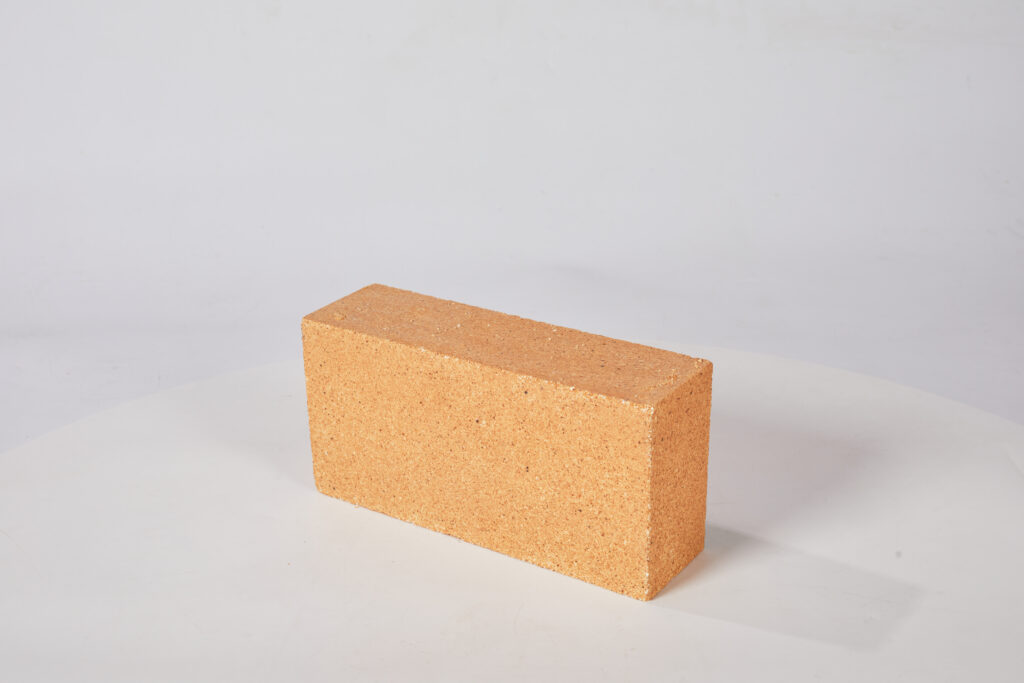
Higher-grade products can also be distinguished by appearance. Premium bricks usually exhibit a uniform light yellow or yellowish-brown color, with dense, crack-free cross-sections and a clear metallic sound when struck.
- Typical Applications
In industrial production, clay refractory bricks are used almost everywhere:
Iron and Steel Metallurgy Industry:
- Blast Furnace Systems: Mainly used in the middle-lower furnace shaft and throat areas. These zones operate at relatively lower temperatures but must withstand abrasion from furnace charges and gas冲刷.
- Hot Blast Stoves: Serve as checker bricks and wall materials in regenerators, enduring cyclic temperature changes.
- Molten Iron Pretreatment Equipment: Such as mixer linings and ladles, requiring regular maintenance and replacement.
Building Materials Industry:
- Cement Rotary Kilns: Primarily used in preheating and cooling zones, where temperatures are moderate but conditions are complex.
- Glass Melting Furnaces: Extensively used in regenerators, effectively resisting acidic gas erosion.
Chemical Industry:
- Coke Ovens: Applied in oven doors and ascension pipes, requiring good sealing and thermal stability.
- Gas Generators: Used as lining materials, enduring both high temperatures and chemical corrosion.
Other Industries:
- Ceramic Kilns: Used for kiln car tops and wall construction.
- Boiler Systems: Mainly employed in combustion chambers and flues.
- Non-Ferrous Metal Smelting: Used in non-direct contact areas of melting furnaces.
- Usage and Maintenance Guidelines
To fully leverage the performance of clay refractory bricks, attention to the following details is essential:
Construction Techniques:
- Joint control is critical, typically maintained between 1-3 mm. Excessively large joints can cause thermal gas short-circuiting, while overly small joints may hinder expansion compensation.
- Use specialized refractory mortar with chemical compositions matching the bricks to avoid adverse reactions.
Thermal Expansion Management:
- Sufficient expansion joints must be预留, generally 6-8 mm per meter in length. Special attention is needed at corners and structural transition areas.
- Flexible materials like ceramic fiber can fill expansion joints, ensuring both sealing and thermal expansion allowance.
Temperature Control:
- Newly constructed furnaces must follow strict heating curves to prevent rapid moisture evaporation and brick cracking.
- Avoid prolonged over-temperature operation during daily use, as this significantly shortens brick lifespan.
Maintenance:
- Regularly inspect brick erosion, focusing on hot-face erosion depth and crack development.
- For localized damage, refractory spray coatings can be used for repairs to extend overall service life.
- In alkaline environments, closely monitor erosion rates and schedule timely replacements.
Conclusion
As the most fundamental member of the refractory material family, clay refractory bricks hold a vital position in industrial applications due to their excellent cost-performance ratio. Although their maximum service temperature falls short of some advanced refractories, their comprehensive performance in medium-to-low temperature ranges remains irreplaceable. With continuous improvements in production processes, modern clay refractory bricks are achieving ever-better performance and will remain indispensable key materials for industrial furnaces in the foreseeable future.